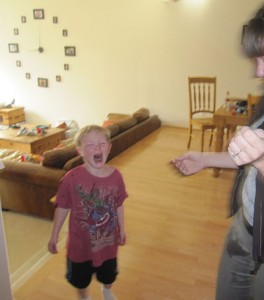
 No, Angry Parents isn’t the latest game application for your smartphone, it’s one of the biggest challenges we face when raising children! When we find ourselves as angry parents, it shifts the entire connection dynamic with our kids, and within ourselves. It isn’t a place we want to be, as totally understandable as it is. There are tools that can help us develop more mastery over our own anger, and create more ease and confidence in our parenting.
It is helpful to keep in mind that most of the time, anger is simply a disguise for another feeling. A somewhat overly simplified slogan is nevertheless instructive: mad is really sad. I would add that mad is very often hurt, or some variation. Read the rest of this entry »
 The brain development needed to equip an individual with the kinds of qualities needed for peace and prosperity — self-regulation, creative innovation, mental flexibility, robust will — begins during pregnancy, and it isn’t just diet and lifestyle choices that influence it. A pregnant woman’s thoughts and moods have a significant impact upon the brain development of her baby in the womb.
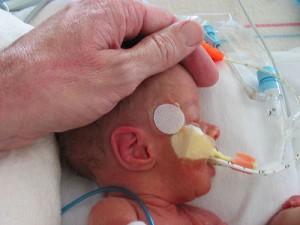 It is good news that the rate of premature birth is down in the U.S. by about 1% from its 2006 high of 12.8%. It is bad news that one out of eight babies born in America (11.7%) is born too soon. With World Prematurity Awareness Day tomorrow, there is a flurry of coverage of the Lancet’s report about
  Before getting my degree and writing Parenting for Peace, my previous body of work explored the psychological and social issues in adoption. Understanding how adoption is unique can help bring healing and wholeness to everyone involved. Last weekend, as I basked in Hawaii’s soothing trade winds and the wisdom being shared at the Mid-Pacific Conference on Birth & Primal Health Research, I was inspired by the uniquely Hawaiian concepts of hanai and ‘ohana. These have to do with family connections that expand and expand, without anyone losing one’s own history.

 A big pet peeve of mine is the label “attachment disorder.” This is a diagnosis given to kids who have typically experienced severe disruption in the natural order of what should have been the effortless, instinctual connection we’re designed to make from the very beginning. They were prepared at the level of their brains, their hormones and their entire sensing organism to connect, to be skin-to-skin with oxytocin flowing and weaving the powerful bonding foundations for healthy attachment. They expected to connect.
 I write a lot about the central role of healthy attachment for child wellbeing. But what IS attachment and how do you get it?? It can be easy for someone like me who is steeped daily in the topic to take it for granted that people know what we mean when we say “attachment.” And as developmental psychologist author Gordon Neufeld has pointed out, attachment is not an intuitive word — in other words a word whose meaning is naturally and easily understood.